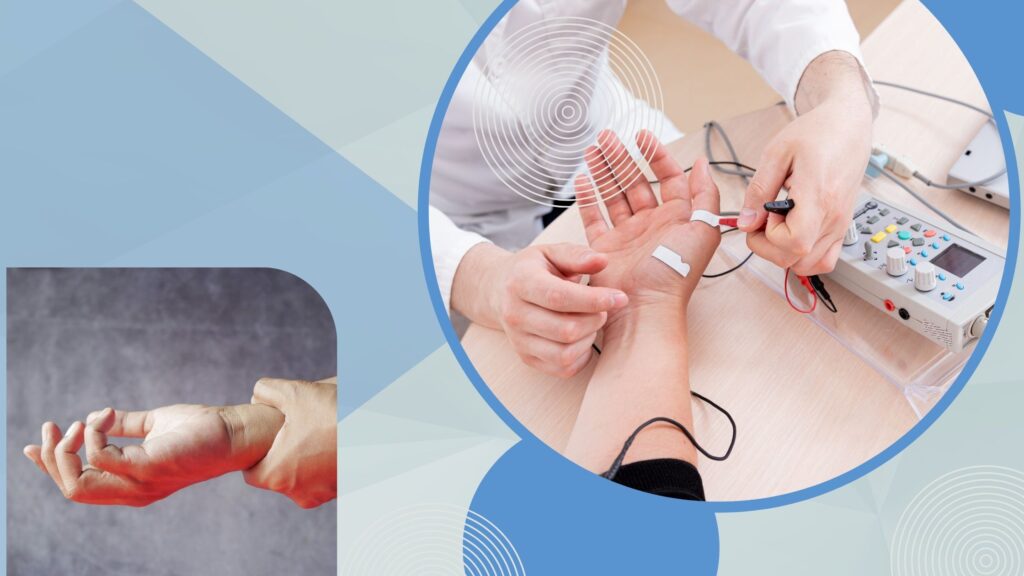
If your doctor has referred you for an EMG or a nerve conduction study, you may have questions about what each procedure is and if one or the other is better. Both EMGs and nerve conduction studies are two of the most important diagnostic tools in neurology. While they are very similar, each diagnostic tool measures different parts of the nerves and responses.
Do You Need a Neurological Consult? Contact Us
Note: Content on neuromedpa.com is not doctor’s advice and should not be taken as such. Always contact your primary care doctor for medical services, diagnosis, treatment, lifestyle adjustments, and more.
Nerve Conduction Studies: Purpose & Procedure
A nerve conduction study (NCS) measures how fast and how well your body’s electrical signals move along your nerves. This is thought of as a “speed test” for your nervous system. NCS measures the ability of a peripheral nerve to conduct an electrical impulse from a stimulus, measured in meters per second. The response time is sent to an attached recording machine for measurement.
The procedure is non-invasive. A specialist attaches recording electrodes to your skin and places stimulating electrodes against your skin, depending on where you’re having symptoms. The electrodes send a tiny electrical current through your nerves, and you will feel a small shock. This measures both the strength of the nerve signal and the speed at which it travels.
If the signal travels more slowly than it should in a healthy nerve, it means the nerve is likely damaged. Because no needles penetrate the skin, NCS testing is very safe. The electrodes remain on the surface of your skin, and the strength of the electrical signals transmitted into your body is too small to damage any tissue. Most patients describe the sensation as a mild tingle or brief static-electric feeling.
Electromyography Tests: Purpose & Procedure
Where a nerve conduction study focuses on the nerve itself, an electromyography (EMG) test looks at what happens inside the muscle.
An EMG test measures the electrical signals your muscles produce at rest and when used. A healthy muscle should not give off any electrical signals when you aren’t moving it. If your muscle is damaged, it may show abnormal electrical activity at rest or during activity.
EMG measures the electrical activity of the muscle at rest, during a slight contraction, and during a forceful contraction. To do this, a provider inserts a small needle with an electrode through your skin and into your muscle. These needles stay in your muscles, and the examination for each muscle generally takes one to two minutes. The EMG turns the electrical activity into sounds, graphs, or numbers for your doctor to interpret.
You may feel mild discomfort during an EMG test. Let your provider know if your pain becomes very uncomfortable, as this may affect your test results. The muscles tested may be sore for a few days after the test, and you may also have minor bruising where the needles were placed. These effects are temporary and typically resolve quickly. You can consult with your doctor about any questions or concerns.
Common Diagnoses of Nerve Conduction & EMG Tests
Electromyography and nerve conduction studies are important for diagnosing motor neuron diseases (ALS), spinal root diseases (disc herniations), peripheral neuropathies (diabetes), single-nerve damage (carpal tunnel syndrome), neuromuscular transmission disorders (myasthenia gravis), and primary muscle diseases (muscular dystrophies).
Some of the most common conditions these tests help identify include:
Carpal Tunnel Syndrome: Compression of the median nerve in the wrist, leading to hand weakness and tingling. In carpal tunnel syndrome, EMG and nerve conduction studies may show slowed electrical signals across the wrist. These findings help confirm the diagnosis and assess severity, helping to guide treatment decisions.
Peripheral Neuropathy: Damage to peripheral nerves, often seen in conditions such as diabetes, autoimmune disorders, or after injury. EMG nerve conduction testing helps identify the type and extent of nerve damage. It can also help differentiate between sensory and motor nerve involvement, providing key insights into the underlying cause.
Radiculopathy: A nerve root in the spine is compressed or irritated, often due to a herniated disc, spinal stenosis, or arthritis. EMG and nerve conduction studies help localize the affected nerve root and assess the severity of the compression. This information is often used alongside imaging to confirm the diagnosis and guide spine treatment plans.
ALS (Amyotrophic Lateral Sclerosis): Though rare, motor neuron diseases such as ALS can also be evaluated using EMG. EMG is one of several tools neurologists use to support a diagnosis of ALS or rule out other neuromuscular conditions with similar symptoms.
Muscle Disorders: Muscle disorders (myopathies), such as muscular dystrophy, polymyositis, and dermatomyositis, are also among the conditions these tests can help identify.
Learn more about how a nerve conduction study can help with your diagnosis and treatment plan.
When Are Nerve Conduction Studies & EMGs Performed Together?
In many cases, your neurologist will order both tests during the same appointment. EMG and NCS tests are performed together because they can help determine whether a problem is caused by muscle dysfunction (EMG) or nerve damage (NCS), or both. This difference matters greatly when choosing the right treatment plan.
If a patient has weakness, these tests can determine whether the problem originates in the nerves, muscles, or the communication between them. For conditions like carpal tunnel syndrome, the combined results of EMG and NCS provide a more accurate diagnosis. These tests also guide neurologists in tailoring effective treatment plans, such as physical therapy, medication, or surgery.
Electrodiagnostic studies help localize lesions, differentiate between sensory and motor involvement, distinguish axonal from demyelinating patterns, and determine the condition’s progression. In other words, when both tests are used together, your neurologist gains a far more complete picture of what is happening in your nervous system and why.
Both tests are performed in an outpatient setting and typically take 30 to 90 minutes, depending on the complexity. No general anesthesia is required, and most patients return to normal activities the same day.

Contact Neurological Medicine for Nerve Conduction & EMG Testing in Maryland
If you are experiencing unexplained muscle weakness, numbness, tingling, or nerve pain, you deserve reliable answers to base your treatment plan on. At Neurological Medicine, our physicians specialize in the full spectrum of electrodiagnostic testing, including nerve conduction studies and EMG. We combine clinical expertise with a patient-centered approach, making sure you understand your results and what they mean for your care.
Whether you have been referred by another provider or are seeking a specialist on your own, we are here to help you find clarity and move forward with confidence.
Worried about yourself or a loved one? Contact our office today to schedule your nerve conduction study or EMG evaluation. We have two offices in Maryland, Greenbelt and Laurel, for your convenience.

Neurological Medicine, P.A.
Neurological Medicine, P.A., provides comprehensive diagnostic and treatment services to patients with conditions affecting the brain, spinal cord, nerves, and muscles. We have been serving the Prince George’s and Montgomery County area since 1975, with two offices: Greenbelt and Laurel. We offer complete adult neurological care as well as in-office neurodiagnostic studies.
- Neurological Medicine, P.A.
- Neurological Medicine, P.A.
- Neurological Medicine, P.A.
- Neurological Medicine, P.A.
- Neurological Medicine, P.A.
- Neurological Medicine, P.A.
- Neurological Medicine, P.A.
- Neurological Medicine, P.A.
- Neurological Medicine, P.A.
- Neurological Medicine, P.A.
- Neurological Medicine, P.A.
- Neurological Medicine, P.A.
- Neurological Medicine, P.A.
- Neurological Medicine, P.A.
- Neurological Medicine, P.A.
- Neurological Medicine, P.A.
- Neurological Medicine, P.A.
- Neurological Medicine, P.A.
- Neurological Medicine, P.A.
- Neurological Medicine, P.A.
- Neurological Medicine, P.A.
- Neurological Medicine, P.A.